
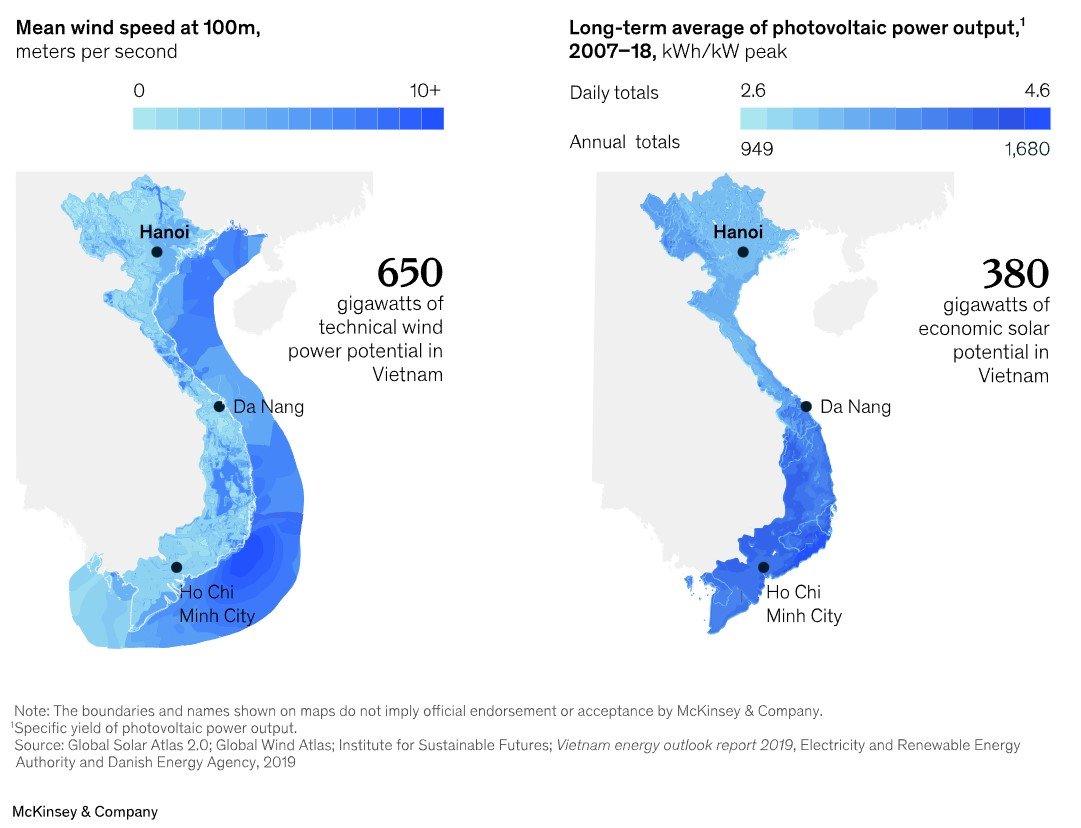
Vietnam is rapidly emerging as a leader in the renewable energy sector in Southeast Asia, attracting substantial foreign investment. With its abundant natural resources and government support for sustainable development, the country is making significant strides in solar, wind, and other renewable energy sources. For foreign investors, Vietnam offers a growing and dynamic market that presents numerous opportunities in the clean energy sector. In this post, we will explore the future of renewable energy investment in Vietnam and highlight the key opportunities for investors.
1. Vietnam’s Renewable Energy Growth and Government Policies
Vietnam has set ambitious targets for renewable energy development. According to the Vietnam Ministry of Industry and Trade, the country aims to increase its renewable energy capacity to 10% of total energy by 2030, with wind and solar playing key roles in achieving this goal. The government has implemented a range of policies and incentives to support the growth of renewable energy, including feed-in tariffs (FITs) for solar and wind energy projects, tax exemptions, and favorable land leasing terms for developers.
-
Solar Energy: Vietnam’s solar power capacity has grown exponentially in recent years. In 2020, the country’s solar energy capacity reached over 16,000 MW, and it continues to grow as new projects are developed. The Vietnam Solar Energy Association reports that Vietnam is among the top countries in Southeast Asia for solar power capacity.
-
Wind Energy: The potential for wind energy in Vietnam is also significant. With over 3,200 km of coastline, the country has the natural resources to become a major player in the global wind energy market. The government is focused on offshore and onshore wind projects, with a goal of generating 12,000 MW of wind energy by 2030.
For more information on the government’s renewable energy targets and policies, visit the Vietnam Ministry of Industry and Trade here.
2. Investment Opportunities in Solar Power
Vietnam’s solar energy sector has seen remarkable growth, driven by government incentives and decreasing costs of solar technology. The country’s solar power feed-in tariff (FIT) has attracted international investors, with projects in both utility-scale solar plants and rooftop solar installations.
According to the Vietnam Solar Energy Association, Vietnam added over 9,300 MW of solar capacity in 2020 alone, making it one of the fastest-growing solar markets in Asia. As of now, solar energy accounts for more than 8% of Vietnam’s total electricity generation, and this figure is expected to grow.
Key opportunities in solar energy investment include:
-
Utility-Scale Solar Farms: With the government offering favorable FIT rates, large-scale solar projects are increasingly attractive. Investors can benefit from long-term contracts and stable returns.
-
Rooftop Solar: With a growing focus on sustainability, residential and commercial rooftop solar installations are gaining popularity. This segment provides a unique opportunity for investors looking to enter the renewable energy market on a smaller scale.
For up-to-date insights on solar energy developments in Vietnam, refer to the Vietnam Solar Energy Association here.
3. Wind Power: Untapped Potential for Investors
Vietnam’s potential for wind power is immense, and foreign investors are increasingly recognizing the country as a key market for wind energy development. With an abundance of wind resources, particularly in coastal areas such as Binh Thuan and Ninh Thuan, Vietnam is well-positioned to become a regional leader in wind energy production.
In 2020, the government approved the National Wind Energy Development Plan, which aims to generate 12,000 MW of wind power by 2030. This growth is expected to create significant investment opportunities for both onshore and offshore wind farms.
Key opportunities in wind energy include:
-
Offshore Wind Projects: Offshore wind farms along Vietnam’s coastline represent a large, untapped market. These projects have high potential for long-term, sustainable energy generation.
-
Onshore Wind Farms: Vietnam’s inland areas, particularly in the central and northern regions, also offer strong opportunities for onshore wind power development.
For detailed information on Vietnam’s wind energy development, check the Vietnam Wind Power Association here.
4. Government Incentives and Investment Climate for Renewable Energy
The Vietnamese government offers a range of incentives to encourage foreign investment in renewable energy, including:
-
Tax Exemptions and Reductions: For businesses in renewable energy sectors, the government provides tax holidays and reductions, which can significantly enhance project profitability.
-
Priority Investment Areas: The government has identified renewable energy as a priority sector and offers streamlined permitting processes for renewable energy projects.
-
International Partnerships: The government encourages partnerships between local developers and foreign investors, offering incentives such as favorable land leases and financing options.
The government’s commitment to sustainable energy development is reflected in its ongoing efforts to create an investment-friendly environment for renewable energy. For more details on investment incentives in Vietnam’s renewable energy sector, visit the Vietnam Investment Review here.
5. Investment Risks and Challenges
While Vietnam presents significant opportunities in renewable energy, investors should also be aware of potential challenges. These include:
-
Regulatory Risks: Although the government is supportive of renewable energy, changes in policies, tariffs, or incentives can create uncertainties for investors. Staying updated on regulatory changes is crucial.
-
Infrastructure Constraints: Despite rapid growth, Vietnam’s energy infrastructure still faces challenges, including grid capacity limitations in certain areas, which may impact the integration of renewable energy into the national grid.
-
Financing and Investment Security: Securing financing for large-scale renewable energy projects can sometimes be challenging, particularly in rural areas where development and infrastructure are less advanced.
For insights into managing investment risks in Vietnam’s renewable energy sector, refer to the Vietnam Investment Review here.
6. The Future of Renewable Energy in Vietnam
Vietnam’s renewable energy sector is poised for continued growth, driven by both domestic demand and international investment. The government’s strong commitment to clean energy, combined with an abundance of natural resources, makes Vietnam an attractive destination for renewable energy projects.
As the global demand for sustainable energy continues to rise, Vietnam offers investors the chance to participate in the country’s green energy transition. With the right knowledge and preparation, foreign investors can capitalize on this growing sector and contribute to the development of a sustainable future for Vietnam.
Conclusion
The renewable energy market in Vietnam presents significant investment opportunities, particularly in solar and wind power. With strong government support, favorable policies, and a growing demand for clean energy, Vietnam is becoming a hub for renewable energy investment in Southeast Asia.
At DealFlow.sg, we specialize in connecting foreign investors with the most promising renewable energy projects in Vietnam. Our platform provides local market insights, regulatory guidance, and expert advisory services to ensure that your investment is positioned for long-term success in this dynamic sector.
