
Vietnam’s manufacturing sector has rapidly evolved into one of the country’s key economic drivers, attracting significant foreign direct investment (FDI) and contributing heavily to GDP growth. With a strategic location in Southeast Asia, competitive labor costs, and a growing middle class, Vietnam offers abundant opportunities for foreign investors looking to capitalize on the country’s industrial boom. In this post, we’ll explore the current state of Vietnam’s manufacturing sector, key growth areas, and investment opportunities for foreign investors.
1. Vietnam’s Manufacturing Growth and Strategic Location
Vietnam’s manufacturing sector has experienced remarkable growth over the last decade. The sector accounts for approximately 40% of Vietnam’s GDP, and it continues to grow at a rapid pace, attracting substantial foreign investment. According to the Vietnam Ministry of Industry and Trade, foreign manufacturers are increasingly choosing Vietnam as their production hub due to its strategic location, low labor costs, and access to regional and global markets.
-
Strategic Location: Situated at the crossroads of Asia-Pacific trade routes, Vietnam serves as a gateway for manufacturers looking to access markets in China, ASEAN countries, and the broader Asia-Pacific region.
-
Trade Agreements: Vietnam is a signatory of several Free Trade Agreements (FTAs), including the Comprehensive and Progressive Agreement for Trans-Pacific Partnership (CPTPP) and the EU-Vietnam Free Trade Agreement (EVFTA), which give foreign investors favorable access to a combined market of over 2.2 billion consumers.
For more on Vietnam’s strategic trade agreements and positioning, visit the Vietnam Ministry of Industry and Trade here.
2. Key Sectors Driving Manufacturing Growth
Vietnam’s manufacturing sector is diverse, with several key industries contributing significantly to the country’s export growth. The following sectors are particularly attractive for foreign investors:
-
Electronics and Electrical Equipment: Vietnam has become a major hub for electronics manufacturing, with global giants like Samsung, LG, and Intel investing heavily in the country. The electronics and electrical equipment industry accounts for a substantial portion of Vietnam’s exports, with smartphones and consumer electronics leading the way.
-
Textiles and Apparel: Vietnam is one of the world’s largest exporters of textiles and garments, with the industry contributing over 14% of total exports. The country has become an essential link in the global supply chain for apparel brands and retailers.
-
Automotive Manufacturing: The automotive industry is another growing sector, with Toyota, Hyundai, and Ford among the major players investing in production facilities in Vietnam. The government’s incentives for electric vehicle production further position the automotive sector for future growth.
-
Furniture Manufacturing: With an abundance of raw materials and competitive labor costs, Vietnam is a major exporter of furniture and home goods. The country’s furniture industry is expanding rapidly, with investments flowing into production facilities that cater to global demand.
For more information on Vietnam’s manufacturing sectors, visit the Vietnam General Department of Customs here.
3. Labor Costs and Workforce: Competitive Advantage for Manufacturers
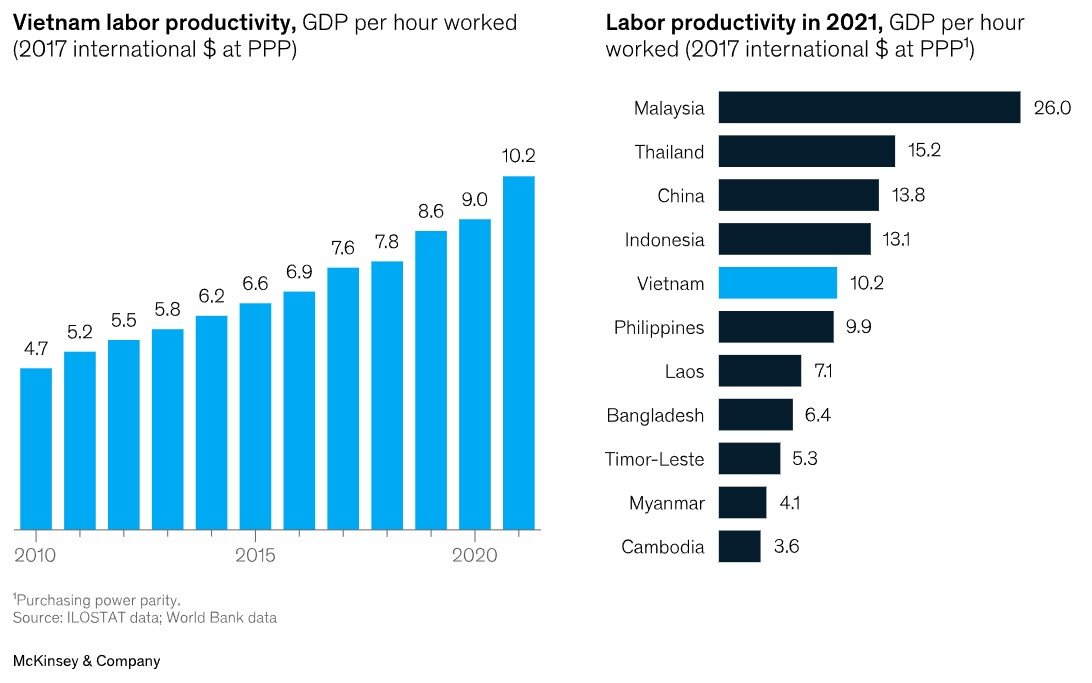
One of the primary factors driving foreign investment in Vietnam’s manufacturing sector is the country’s competitive labor costs. Vietnam offers a young and growing workforce, with a median age of just 30 years. Labor costs are significantly lower than in China, making Vietnam an attractive alternative for manufacturers looking to reduce costs while maintaining high-quality production.
-
Skilled Labor: Vietnam is home to a growing pool of skilled workers, particularly in industries like electronics, textiles, and automotive. The country has been investing in improving its education system to ensure that the workforce is equipped with the skills needed for modern manufacturing.
-
Labor Productivity: Labor productivity is improving, driven by the adoption of Industry 4.0 technologies such as automation, robotics, and the Internet of Things (IoT), making Vietnamese factories increasingly efficient.
Foreign investors can tap into Vietnam’s labor advantages by establishing manufacturing facilities or partnering with local businesses that already have a strong presence in the country’s industrial sector.
4. Investment Incentives and Government Support
The Vietnamese government is committed to promoting foreign investment in the manufacturing sector through various incentives, particularly for high-tech and green manufacturing projects. Key incentives include:
-
Tax Breaks and Exemptions: The government offers preferential corporate income tax rates (as low as 10%) for projects in certain sectors, including high-tech, green manufacturing, and electronics.
-
Land Use Incentives: Foreign investors can lease land for manufacturing projects in industrial zones, and certain projects may qualify for tax holidays or land rent exemptions for a specified period.
-
Support for Industry 4.0: The government is providing support for the adoption of smart manufacturing technologies. Companies investing in automation, robotics, and AI can access financial support and favorable policies.
For more details on government incentives for manufacturing investments, check the Vietnam Investment Review here.
5. Vietnam’s Export-Oriented Manufacturing Strategy
Vietnam has positioned itself as a critical player in global supply chains, particularly in export-oriented industries like electronics, textiles, and automotive. The country’s participation in global trade agreements has made it an attractive destination for companies looking to expand their manufacturing capacity and access international markets.
-
Export Growth: Vietnam’s total exports reached US$336 billion in 2020, and the manufacturing sector is the largest contributor to this figure. With access to preferential trade terms through FTAs, foreign manufacturers can benefit from reduced tariffs and increased market access.
-
Supply Chain Integration: As global supply chains become more diversified, Vietnam’s manufacturing sector plays a vital role in providing low-cost, high-quality production for companies in industries like electronics, automotive, and apparel.
The Vietnam Export-Import Bank (EXIMBANK) provides financing options for foreign investors looking to establish manufacturing operations geared toward exports. Learn more about export financing and opportunities at EXIMBANK here.
6. Real Estate and Industrial Parks: Prime Locations for Manufacturing Investments
Vietnam’s real estate market, particularly in industrial parks and special economic zones, is seeing significant growth. The government has developed several industrial zones near key transportation hubs to facilitate the growth of the manufacturing sector. These zones offer foreign investors ready-to-use land, access to infrastructure, and streamlined processes for setting up production facilities.
-
Industrial Parks: Areas like Binh Duong, Dong Nai, and Hai Phong have become key manufacturing hubs, offering competitive land prices and infrastructure. These industrial zones cater to sectors such as electronics, textiles, and automotive.
-
Special Economic Zones: The government has designated certain areas as special economic zones, offering even more attractive incentives, including reduced taxes and faster business registration processes.
For more on Vietnam’s industrial parks and special economic zones, check the Vietnam Industrial Parks Association here.
Conclusion
Vietnam’s manufacturing sector is thriving and offers significant investment opportunities for foreign investors. With a strategic location, competitive labor costs, government support, and participation in global trade agreements, Vietnam is well-positioned as a key player in the global manufacturing supply chain. Whether you are interested in electronics, textiles, or green manufacturing, Vietnam provides ample opportunities to enter and expand in Southeast Asia’s dynamic market.
At DealFlow.sg, we connect foreign investors with high-potential manufacturing opportunities in Vietnam. Our expertise in local market dynamics, government policies, and sector-specific trends ensures that your investments are set up for long-term success in Vietnam’s growing manufacturing industry.
