
Vietnam is emerging as one of Southeast Asia’s most attractive destinations for foreign investment. With its booming economy, young and dynamic workforce, and robust market opportunities, the country offers a wealth of potential for investors. However, successfully entering Vietnam’s market requires strategic planning and an understanding of local business practices. In this post, we’ll provide the top tips for foreign investors looking to tap into Vietnam’s thriving market.
1. Understand Vietnam’s Economic Landscape and Growth Potential
Vietnam’s GDP has been growing at an average rate of 6.4% per year over the past decade, making it one of the fastest-growing economies in Asia. The country’s economic growth is driven by its rapidly expanding middle class, strong industrial output, and increasing foreign investments in key sectors like manufacturing, technology, and real estate. Vietnam is expected to be one of the top global economic performers, with projected GDP growth of 6.5% in 2022. Understanding the macroeconomic factors and growth potential of Vietnam is crucial for foreign investors looking to capitalize on the country’s upward trajectory.
For the latest economic data and forecasts, visit the Vietnam Ministry of Planning and Investment here.
2. Leverage Vietnam’s Strategic Location in Southeast Asia
One of Vietnam’s most significant advantages for investors is its strategic location in Southeast Asia. Sharing borders with China, Laos, and Cambodia, and having a coastline along the South China Sea, Vietnam is well-positioned to serve as a hub for trade and investment within the ASEAN region. The country’s location provides access to some of the world’s largest and fastest-growing markets, including China and India, making it an ideal location for companies seeking to expand their reach in the Asia-Pacific region.
Vietnam is also part of various free trade agreements (FTAs), such as the CPTPP and the EU-Vietnam Free Trade Agreement (EVFTA), which offer foreign investors reduced tariffs and better trade terms. You can find more information on Vietnam’s FTAs on the Vietnam Ministry of Industry and Trade website here.
3. Focus on High-Growth Sectors in Vietnam
Vietnam offers numerous high-growth sectors for foreign investment, with key opportunities in areas such as:
-
Technology: With Vietnam’s rapidly expanding digital economy, e-commerce, fintech, and IT services are among the top sectors attracting foreign investment. The country is expected to have a US$52 billion digital economy by 2025.
-
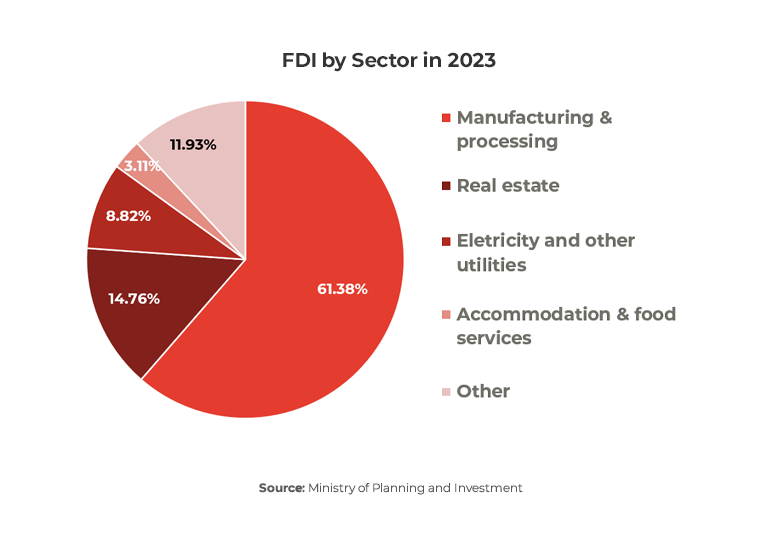
Manufacturing: The country is becoming a global manufacturing hub, particularly in electronics, textiles, and automotive industries. Foreign companies such as Samsung, LG, and Intel have already established significant operations in Vietnam.
-
Renewable Energy: As part of its commitment to sustainable development, Vietnam is making significant strides in solar and wind energy. The country aims to generate 10% of its energy from renewable sources by 2030, creating substantial investment opportunities in this sector.
-
Real Estate: Vietnam’s rapid urbanization and growing middle class are fueling demand for residential, commercial, and industrial real estate. The sector has attracted a steady flow of foreign capital, with projects in Ho Chi Minh City, Hanoi, and other major urban centers.
4. Choose the Right Business Structure
When entering the Vietnamese market, it’s essential to choose the right business structure. Foreign investors can establish their business in several ways:
-
100% Foreign-Owned Enterprises (FOEs): In certain sectors, foreign investors can fully own and operate businesses in Vietnam.
-
Joint Ventures (JVs): Investors can partner with local Vietnamese businesses to form joint ventures. This structure can provide valuable local knowledge and resources while maintaining international capital.
-
Wholly Foreign-Owned Subsidiaries (WFOEs): For businesses in sectors like services, finance, and technology, WFOEs are a common choice. Foreign investors have full control over the business operations in this structure.
Choosing the right structure depends on the type of business, the sector, and local regulations. It is advisable to consult with legal experts and experienced business consultants in Vietnam to ensure the best approach for your investment.
5. Build Strong Local Partnerships
Establishing strong partnerships with local businesses and stakeholders is key to success in Vietnam. Local partners provide valuable insights into the market, regulatory environment, and cultural norms, making it easier for foreign investors to navigate the complexities of doing business in Vietnam.
DealFlow.sg plays a critical role in connecting foreign investors with trusted local partners across various industries. Our platform helps facilitate introductions to businesses, advisors, and service providers, ensuring that your investments are well-positioned for long-term success.
6. Comply with Local Regulations and Labor Laws
One of the most important steps for foreign investors is to understand and comply with Vietnam’s regulatory and labor laws. Key regulations include:
-
Foreign Ownership Limits: While foreign investors can generally own up to 100% of businesses in most sectors, there are restrictions in certain industries such as telecommunications and national security. For example, in real estate, foreign ownership in a project is typically limited to 10% of the total area.
-
Labor Laws: Vietnam has a young, dynamic workforce, and foreign investors should ensure compliance with labor laws, including employment contracts, social insurance, and work permits for foreign employees. Learn more about Vietnam’s labor regulations from the Vietnam Ministry of Labor here.
By staying informed about regulatory changes, businesses can avoid legal complications and ensure smooth operations in the Vietnamese market.
7. Take Advantage of Vietnam’s Investment Incentives
Vietnam offers several incentives to foreign investors, particularly in high-priority sectors such as renewable energy, high-tech manufacturing, and agriculture. Some of the key investment incentives include:
-
Tax Exemptions: Businesses in certain industries may be eligible for tax holidays or reduced corporate tax rates.
-
Land Use Incentives: Foreign investors in specific regions or sectors can benefit from favorable land leasing terms and exemptions.
-
Customs Duty Exemptions: Investment in technology and machinery may qualify for customs duty exemptions.
The Vietnam Investment Review provides up-to-date information on available incentives and tax laws, which you can access here.
8. Understand the Legal Framework for Intellectual Property
Protecting intellectual property (IP) is vital when investing in emerging markets. Vietnam has made significant progress in strengthening its IP laws and regulations. Foreign investors should protect their patents, trademarks, and copyrights to avoid infringement. Vietnam is a member of WIPO and the Berne Convention, offering strong protections for IP owners.
For more details on intellectual property rights in Vietnam, visit the National Office of Intellectual Property here.
Conclusion
Entering Vietnam’s market offers immense potential for foreign investors, but success depends on understanding the country’s economic landscape, regulations, and opportunities. By focusing on high-growth sectors, building strong local partnerships, and complying with local laws, foreign investors can tap into the tremendous growth potential that Vietnam offers.
At DealFlow.sg, we provide investors with the insights, connections, and guidance needed to navigate the complexities of investing in Vietnam. Our expertise in local laws, regulatory frameworks, and investment strategies ensures that your investments are set up for success in this rapidly growing market.
