
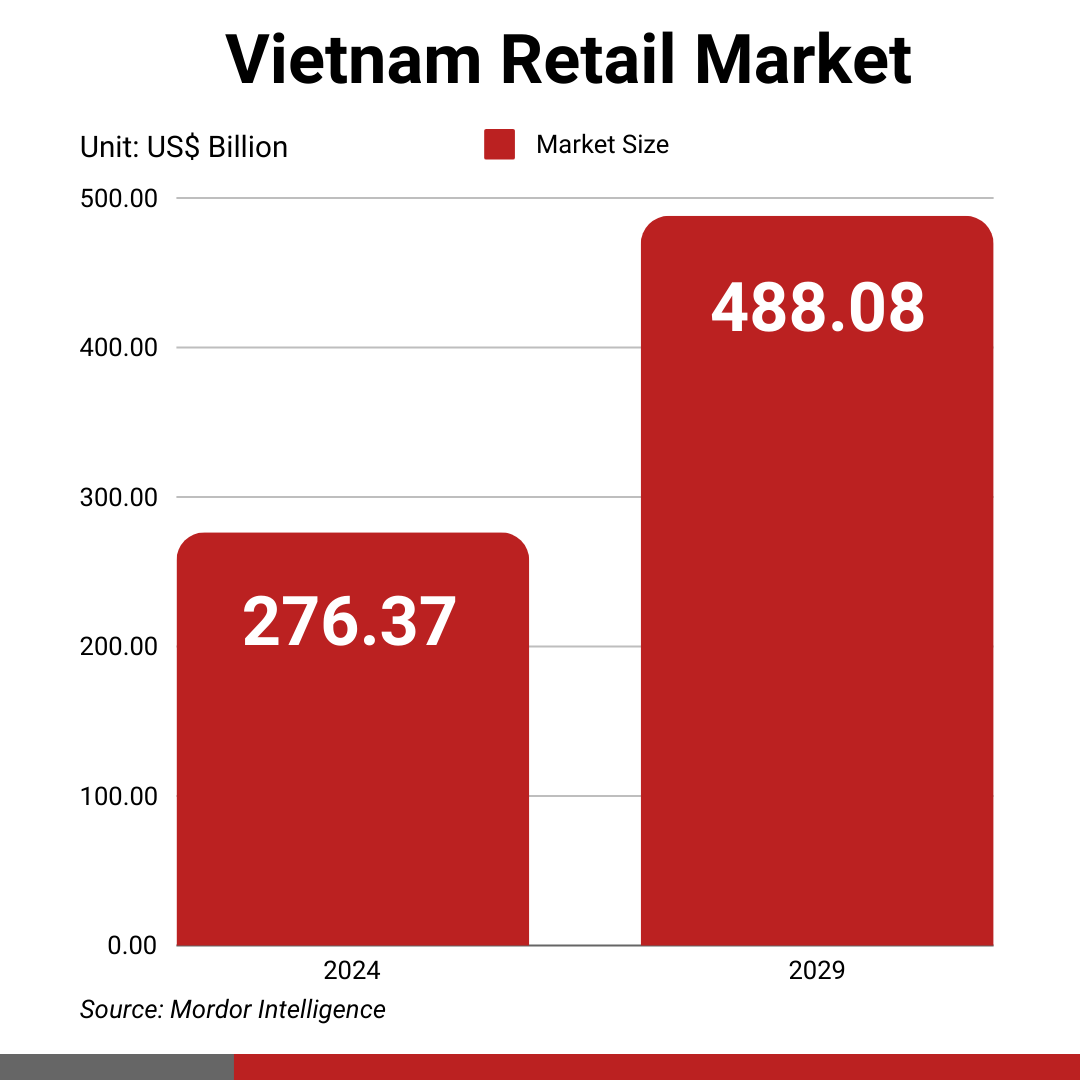
Vietnam’s retail market is one of the most dynamic and rapidly growing sectors in Southeast Asia. With a population of over 97 million and a rising middle class, the country is emerging as a hotbed for retail investment. As the economy continues to grow and consumer spending rises, Vietnam’s retail market presents a wealth of opportunities for foreign investors. In this post, we will explore the key factors driving growth in Vietnam’s retail sector, highlight the most attractive investment opportunities, and explain why now is the perfect time to enter this thriving market.
1. Overview of Vietnam’s Retail Market Growth
Vietnam’s retail market has experienced significant growth in recent years. According to Euromonitor International, retail sales in Vietnam were expected to reach over US$200 billion by 2025. The country’s strong economic growth, combined with rising disposable incomes, is fueling demand for both essential and luxury goods. The growing urban population, increasing internet penetration, and changing consumer preferences are also driving the shift toward modern retail formats.
-
Consumer Spending: Vietnam’s middle class is expanding rapidly, and consumer spending is increasing. By 2025, Vietnam’s middle class is projected to reach 33 million people, creating a strong demand for consumer goods, from everyday necessities to high-end luxury products.
-
Urbanization: Vietnam is experiencing rapid urbanization, with more people moving to cities like Ho Chi Minh City, Hanoi, and Da Nang. This urban growth is contributing to the expansion of retail demand, particularly for modern retail outlets, shopping malls, and supermarkets.
For more information on Vietnam’s retail growth, check the Vietnam Ministry of Industry and Trade here.
2. Factors Driving Growth in Vietnam’s Retail Market
Several factors are contributing to the rapid growth of Vietnam’s retail market, making it an attractive destination for foreign investors:
-
Young and Tech-Savvy Population: Vietnam has a young population, with a median age of 30 years, which drives demand for technology, e-commerce, and lifestyle products. This tech-savvy generation is highly engaged in online shopping, mobile payments, and digital services.
-
Expanding E-Commerce: The rise of e-commerce is one of the most significant factors transforming Vietnam’s retail landscape. According to Google and Temasek, Vietnam’s e-commerce market is expected to exceed US$15 billion by 2025, driven by growing internet penetration, mobile device usage, and the increasing popularity of online shopping platforms like Shopee, Lazada, and Tiki.
-
Foreign Direct Investment (FDI): Foreign investors are increasingly attracted to Vietnam’s retail market due to its strong economic growth and investment-friendly policies. Many international brands and retailers, including H&M, IKEA, and Sephora, are expanding their presence in Vietnam.
For insights on foreign investment in Vietnam’s retail sector, check the Vietnam Investment Review here.
3. Key Sectors for Retail Investment in Vietnam
Vietnam’s retail market is diverse, offering a range of investment opportunities across different sectors. The most attractive sectors for foreign investors include:
-
Supermarkets and Hypermarkets: As Vietnam’s urban population grows, demand for modern retail outlets such as supermarkets and hypermarkets is increasing. Large international retailers such as Big C, AEON, and Metro have already established a strong presence in Vietnam. There is significant potential for new investors to enter the retail space, particularly in suburban areas and smaller cities.
-
Shopping Malls and Retail Centers: Shopping malls and mixed-use developments are booming in Vietnam’s major cities. These retail centers cater to the growing demand for consumer goods, fashion, electronics, and entertainment. Investment opportunities exist in both high-end malls in central business districts (CBDs) and community shopping centers in suburban areas.
-
Convenience Stores: The convenience store segment is expanding rapidly in Vietnam, driven by busy urban lifestyles and the growing preference for on-the-go shopping. Major players like Circle K, 7-Eleven, and Ministop are capitalizing on this trend by expanding their store networks.
-
E-Commerce and Online Retail: The growth of e-commerce presents significant opportunities for investors in the digital retail space. With more Vietnamese consumers shifting toward online shopping, there is ample potential for platforms focusing on fashion, electronics, groceries, and lifestyle products.
For more insights into the retail sector and emerging trends, visit the Vietnam Retail Association here.
4. Foreign Ownership and Retail Investment Regulations in Vietnam
Vietnam offers a relatively open environment for foreign investors looking to enter the retail market. Foreign investors can establish wholly owned subsidiaries, joint ventures, or franchises in Vietnam’s retail sector. However, it is important to be aware of key regulations:
-
Foreign Ownership Limits: While most retail sectors in Vietnam are open to foreign investment, foreign ownership is typically limited to 49% in certain sectors, such as food and beverage, where government policies encourage local ownership. However, foreign investors can still establish joint ventures with local businesses to circumvent ownership restrictions.
-
Retail Licensing: Foreign retailers must apply for a business license and investment registration certificate when establishing retail operations in Vietnam. The process is straightforward but may vary depending on the type of business (e.g., franchise, wholesale, retail).
For detailed information on foreign ownership and regulations in the retail sector, check the Vietnam Ministry of Planning and Investment here.
5. The Future of Retail in Vietnam
Vietnam’s retail market is poised for continued growth in the coming years. With an expanding middle class, increasing disposable incomes, and a shift toward modern retail formats, the market offers abundant opportunities for foreign investors. Some of the key trends shaping the future of retail in Vietnam include:
-
Smart Retail: The adoption of smart retail technologies, including artificial intelligence (AI), big data, and mobile payments, is transforming the shopping experience in Vietnam. Retailers are investing in personalized shopping experiences and integrating online and offline channels to cater to tech-savvy consumers.
-
Sustainability: As environmental awareness grows, consumers in Vietnam are increasingly demanding sustainable and eco-friendly products. Retailers that focus on sustainable sourcing, eco-friendly packaging, and ethical business practices are expected to thrive.
-
Omni-Channel Shopping: With the rise of e-commerce, many traditional retailers are adopting an omni-channel approach, combining both online and offline sales channels. This allows them to cater to both digital-native consumers and those who prefer in-store shopping experiences.
For more on the future of Vietnam’s retail industry, check the Vietnam E-Commerce and Digital Economy Agency here.
6. Risks and Considerations for Foreign Investors
While Vietnam’s retail market presents significant opportunities, there are some risks and considerations that foreign investors should keep in mind:
-
Regulatory Changes: Retail regulations can change, particularly those related to foreign ownership, retail licensing, and e-commerce policies. Investors should stay informed about regulatory updates.
-
Infrastructure Development: Despite rapid growth, some regions of Vietnam still lack modern retail infrastructure. It’s important for investors to assess the infrastructure quality in potential investment locations.
-
Competition: The retail market in Vietnam is becoming increasingly competitive, especially in major cities. It’s crucial for investors to carefully analyze the market and find their niche.
Conclusion
Vietnam’s retail market is one of Southeast Asia’s most promising sectors, offering abundant opportunities for foreign investors. With a rapidly expanding middle class, increasing urbanization, and a strong shift toward modern retail formats, the country’s retail landscape is ripe for investment. Whether you’re interested in supermarkets, shopping malls, e-commerce, or convenience stores, Vietnam provides a wide range of opportunities across different segments.
At DealFlow.sg, we specialize in connecting foreign investors with the best retail investment opportunities in Vietnam. Our platform offers valuable insights, market research, and local expertise to help you navigate Vietnam’s dynamic retail market and ensure your investments are positioned for long-term success.
