
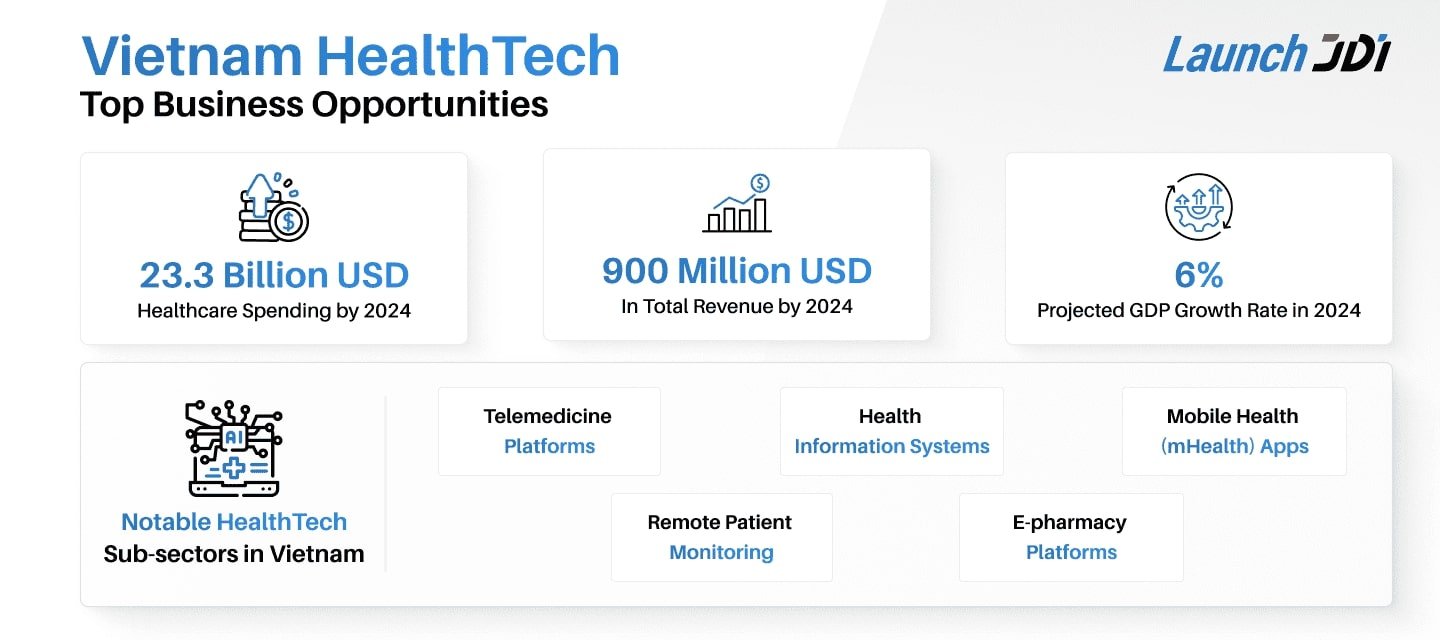
Vietnam’s healthcare sector is experiencing rapid growth, driven by an expanding population, increasing demand for healthcare services, and a rising middle class. With the government’s focus on improving healthcare infrastructure and expanding access to quality healthcare, the sector offers attractive investment opportunities for foreign investors. From hospital and clinic developments to pharmaceuticals and medical technology, Vietnam’s healthcare market is becoming one of the most dynamic and promising in Southeast Asia. In this post, we’ll explore the key drivers of growth in Vietnam’s healthcare sector, highlight investment opportunities, and explain why now is the ideal time to invest in this thriving market.
1. Overview of Vietnam’s Healthcare Market
Vietnam’s healthcare market has grown rapidly over the last decade, supported by the government’s commitment to improving healthcare services, infrastructure, and access to care. According to the World Bank, Vietnam spends approximately 6.5% of its GDP on healthcare, with the government working to improve public healthcare access, especially in rural areas.
-
Growing Demand for Healthcare Services: With a population of over 97 million people and a median age of 30 years, Vietnam faces increasing demand for healthcare services. The country’s growing middle class is also fueling demand for higher-quality healthcare, including private medical services.
-
Aging Population: As Vietnam’s population continues to age, there is an increasing demand for healthcare services related to chronic conditions, elderly care, and medical facilities equipped for geriatric healthcare.
For more insights into Vietnam’s healthcare market, visit the Vietnam Ministry of Health here.
2. Key Drivers of Growth in Vietnam’s Healthcare Sector
Several factors are contributing to the rapid growth of Vietnam’s healthcare market, creating an environment ripe for foreign investment:
-
Economic Growth: Vietnam is one of the fastest-growing economies in Southeast Asia, with GDP growth averaging around 6.5% annually. This economic expansion is driving greater disposable income, which in turn increases demand for quality healthcare services.
-
Healthcare Reforms: The Vietnamese government has introduced significant reforms to improve the healthcare system, focusing on expanding healthcare access and upgrading medical facilities. These reforms provide a favorable environment for foreign investors in areas like hospital infrastructure, medical devices, and health insurance.
-
Increasing Healthcare Expenditure: As the country’s economy grows, healthcare expenditure is rising. Public and private healthcare spending in Vietnam is expected to reach over US$10 billion by 2025, providing ample opportunities for investors in both the public and private sectors.
For further information on Vietnam’s healthcare reforms, check the Vietnam Ministry of Planning and Investment here.
3. Key Investment Opportunities in Vietnam’s Healthcare Sector
Vietnam’s healthcare market offers a wide range of investment opportunities across various sub-sectors. Some of the key areas for foreign investors to consider include:
-
Hospital and Clinic Development: With an increasing demand for quality healthcare services, particularly in major urban areas, there is a growing need for modern hospitals, clinics, and medical centers. Foreign investors can participate in the construction, development, and management of healthcare facilities, particularly in Ho Chi Minh City, Hanoi, and other major cities.
-
Medical Equipment and Technology: Vietnam’s healthcare system requires ongoing investment in modern medical equipment and technology. From diagnostic equipment to advanced surgical tools, foreign investors can take advantage of the growing demand for high-quality medical devices and technology solutions.
-
Pharmaceuticals and Biotechnology: The pharmaceutical sector in Vietnam is expected to grow significantly, driven by rising healthcare demands and the country’s increasing focus on developing domestic drug production. Foreign investors can explore opportunities in pharmaceutical manufacturing, distribution, and biotechnology, especially as the country aims to become a regional hub for drug production and research.
-
Health Insurance: With the rise of the middle class, there is increasing demand for private health insurance. The government’s healthcare reforms, which include the expansion of social health insurance programs, also present opportunities for foreign investors in health insurance and medical coverage products.
For more on the pharmaceutical and healthcare equipment sectors, visit the Vietnam Pharmaceutical Association here.
4. Government Support for Healthcare Investment
The Vietnamese government has prioritized healthcare as part of its long-term development strategy. Some of the key government measures to encourage foreign investment in the healthcare sector include:
-
Tax Incentives: The government offers tax incentives to foreign investors in the healthcare sector, particularly those involved in medical infrastructure development, pharmaceuticals, and medical research. These incentives include reduced corporate income tax rates and exemptions for qualifying projects.
-
Public-Private Partnerships (PPPs): The Vietnamese government is actively promoting public-private partnerships (PPPs) in healthcare, especially for hospital construction and management. These partnerships create opportunities for foreign investors to collaborate with the government and local businesses to expand healthcare access.
-
Investment in Rural Healthcare: The government is focused on improving healthcare access in rural and remote areas, creating opportunities for investors to develop rural healthcare facilities, provide mobile health services, and support health education programs.
For more details on healthcare investment incentives, check the Vietnam Investment Review here.
5. The Role of Technology in Vietnam’s Healthcare Growth
The adoption of technology is one of the key factors shaping the future of healthcare in Vietnam. With an increasing reliance on digital health solutions, including telemedicine, e-health, and AI-based diagnostics, Vietnam is transforming the way healthcare services are delivered.
Key technology-driven areas of growth include:
-
Telemedicine: As access to healthcare in remote areas becomes a challenge, telemedicine offers a solution by allowing patients to consult with doctors remotely. Investors can take advantage of the growing telemedicine market, which has been accelerated by the pandemic.
-
Health IT: The use of electronic health records (EHR), AI diagnostics, and other health IT solutions is becoming more widespread in Vietnam’s hospitals and clinics, creating opportunities for investors in the digital health sector.
-
Mobile Health Apps: With the increasing use of smartphones, mobile health apps are becoming a popular tool for managing health, booking appointments, and monitoring chronic conditions. Investing in health tech and mobile apps is an emerging opportunity in Vietnam.
For more information on health technology trends in Vietnam, check the Vietnam Digital Health Association here.
6. Risks and Considerations for Foreign Investors
While Vietnam’s healthcare sector offers substantial growth potential, there are several risks and considerations to keep in mind:
-
Regulatory Environment: Navigating Vietnam’s healthcare regulations can be challenging for foreign investors, particularly with respect to pharmaceutical approval, medical device registration, and licensing. It is essential to work with local legal and regulatory advisors to understand the full scope of compliance requirements.
-
Competition: As the healthcare sector grows, competition among investors in medical infrastructure, pharmaceuticals, and health insurance will increase. Thorough market research and strategic partnerships with local players are key to success.
-
Infrastructure Gaps: While the government is investing in healthcare infrastructure, there are still some challenges in rural and remote areas. Foreign investors should consider infrastructure availability and accessibility when planning projects outside of major urban centers.
Conclusion
Vietnam’s healthcare sector is one of the most promising investment opportunities in Southeast Asia. With a growing population, increasing demand for healthcare services, and government support for modernization, the country presents a wealth of opportunities for foreign investors. Whether you are looking to invest in healthcare infrastructure, pharmaceuticals, medical technology, or health insurance, Vietnam offers a dynamic market that is primed for growth.
At DealFlow.sg, we specialize in connecting foreign investors with the best opportunities in Vietnam’s healthcare sector. Our platform provides valuable market insights, regulatory guidance, and local expertise to ensure your investments are positioned for long-term success in this rapidly growing sector.
