
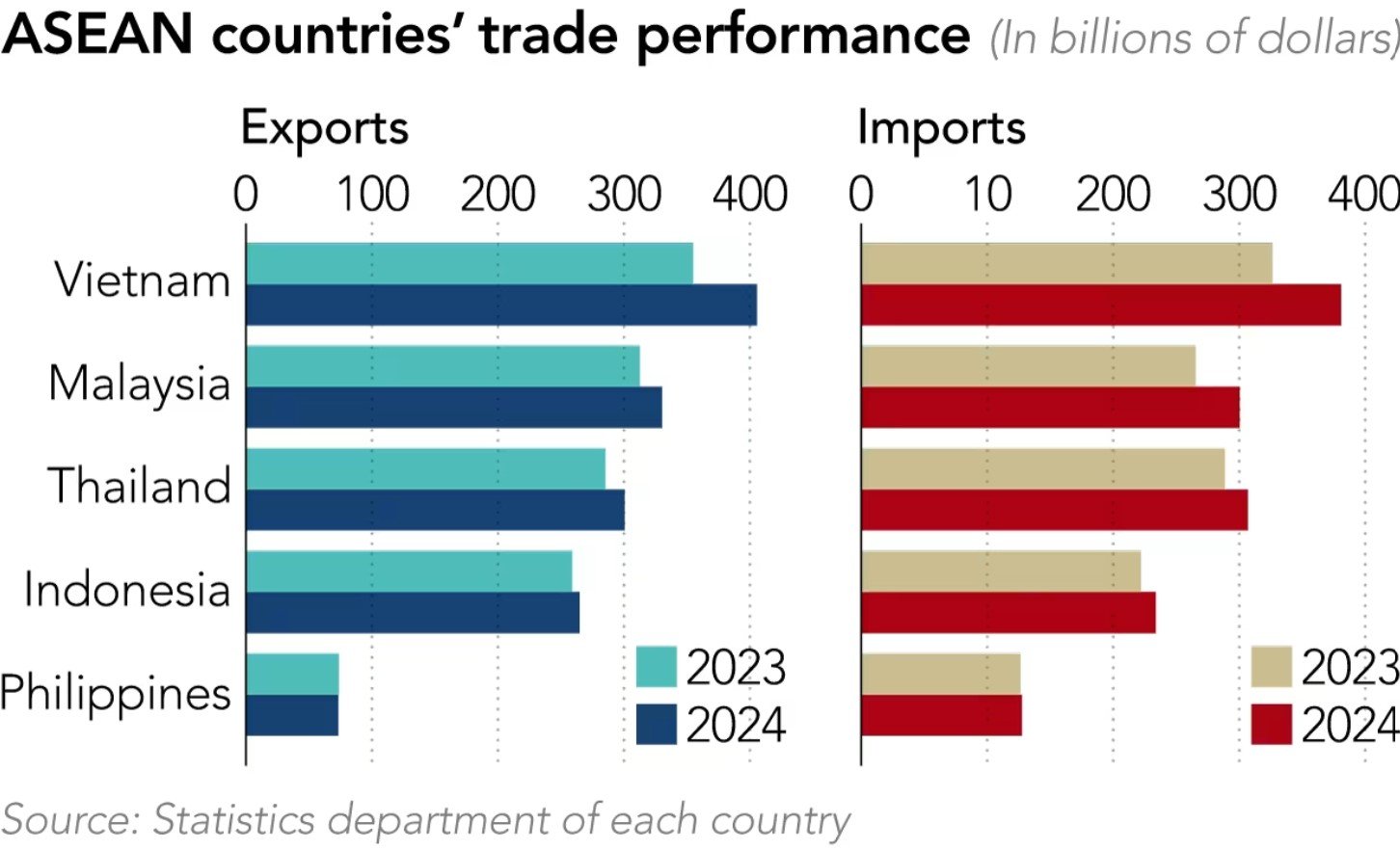
Vietnam has established itself as one of the leading manufacturing hubs in Southeast Asia, attracting significant foreign investment and becoming an essential player in the global supply chain. With a combination of low labor costs, a robust export market, and government policies designed to boost industrial production, Vietnam’s manufacturing and export sectors are booming. In this post, we’ll explore the key factors driving the growth of these sectors, the investment opportunities available, and why now is an ideal time for foreign investors to tap into Vietnam’s manufacturing and export markets.
1. Overview of Vietnam’s Manufacturing & Export Growth
Vietnam’s manufacturing sector has experienced rapid growth over the past decade, with the country now being one of the largest exporters in Southeast Asia. As of 2020, Vietnam’s manufacturing sector accounted for over 16% of the country’s GDP, and total exports reached US$336 billion, driven by key industries such as electronics, textiles, and automotive. The country’s strategic location, favorable trade agreements, and skilled workforce are driving the rapid expansion of its manufacturing capabilities.
-
Export-driven Growth: Vietnam has become a vital player in the global supply chain, with its exports growing at an average rate of 8% annually. The country is one of the world’s largest exporters of electronics, textiles, footwear, automobiles, and agricultural products.
-
Diversified Export Markets: Vietnam’s exports reach markets in China, the United States, the European Union, and ASEAN, supported by multiple Free Trade Agreements (FTAs) such as the CPTPP and EU-Vietnam Free Trade Agreement (EVFTA).
For more on Vietnam’s export sector, check the Vietnam Ministry of Industry and Trade here.
2. Key Drivers of Growth in Vietnam’s Manufacturing & Export Sector
Several key factors are contributing to the growth of Vietnam’s manufacturing and export markets, making it a highly attractive destination for foreign investment:
-
Low Labor Costs: Vietnam offers a highly competitive labor force, with wages significantly lower than in China, making it an attractive destination for companies looking to reduce production costs while maintaining high-quality output.
-
FTA Membership: Vietnam’s participation in numerous FTAs provides preferential access to key international markets, reducing tariffs and allowing for greater export potential. For example, the EU-Vietnam FTA allows Vietnam’s goods to enter the EU with lower tariffs, opening new avenues for trade.
-
Infrastructure Development: The Vietnamese government has heavily invested in improving the country’s infrastructure, including transportation, logistics, and energy systems. These improvements make it easier and more cost-effective to export goods to international markets.
-
Proximity to Key Markets: Vietnam’s strategic location in Southeast Asia, with direct access to global shipping lanes and proximity to major manufacturing hubs like China, positions the country as an ideal base for companies seeking to serve the growing markets of Asia-Pacific and beyond.
For more information on infrastructure development, visit the Vietnam National Infrastructure Development Program here.
3. Key Sectors Driving Manufacturing Growth
Vietnam’s manufacturing sector is diverse, with several key industries leading the charge in exports. Some of the most prominent manufacturing sectors include:
-
Electronics: Vietnam has become a major hub for the production of smartphones, computers, and consumer electronics. Global companies like Samsung, LG, and Intel have established production facilities in Vietnam. The country is also emerging as a key producer of semiconductors and electrical components.
-
Textiles & Garments: Vietnam is one of the largest exporters of textiles and garments, with an extensive network of apparel factories. The country benefits from strong production capabilities and the ability to produce a wide range of products, including clothing, footwear, and textile fibers.
-
Automotive Manufacturing: The automotive industry in Vietnam has witnessed significant growth, with a focus on assembling vehicles and manufacturing auto parts. Major international brands like Toyota, Ford, and Hyundai are investing in local manufacturing facilities to cater to both domestic and international demand.
-
Food Processing & Agriculture: Vietnam is a key exporter of processed food, seafood, and agricultural products such as coffee, rice, and tropical fruits. The country’s manufacturing and processing capabilities are increasingly sophisticated, helping it capture a larger share of the global food export market.
For more insights into Vietnam’s manufacturing sector, visit the Vietnam Chamber of Commerce and Industry here.
4. Investment Opportunities in Manufacturing & Exports
The expansion of Vietnam’s manufacturing and export sectors presents a variety of investment opportunities for foreign investors. Some of the most attractive opportunities include:
-
Foreign Direct Investment (FDI) in Manufacturing Facilities: As Vietnam continues to develop its manufacturing sector, foreign investors have opportunities to invest in building new factories, expanding existing operations, and establishing joint ventures with local firms. Sectors such as electronics, automotive, and textiles offer high returns on investment.
-
Industrial Parks and Logistics Infrastructure: The growth of Vietnam’s manufacturing sector has created strong demand for industrial parks, warehousing, and logistics infrastructure. Investors can capitalize on this demand by investing in the development of industrial zones and providing warehousing solutions to support growing export needs.
-
Supply Chain and Raw Materials: As Vietnam’s manufacturing sector expands, there is increased demand for raw materials, components, and supplies. Foreign investors can look to invest in the supply chain by providing raw materials to manufacturing facilities or establishing partnerships with local suppliers.
-
Technology and Automation in Manufacturing: The Vietnamese government is keen on adopting Industry 4.0 technologies to improve manufacturing productivity and efficiency. Foreign investors with expertise in robotics, artificial intelligence (AI), and automation can explore opportunities to provide these technologies to local manufacturers.
For more details on investment opportunities in manufacturing, check the Vietnam Investment Review here.
5. Government Support and Investment Incentives
The Vietnamese government is actively promoting foreign investment in the manufacturing and export sectors through a range of incentives and policies, including:
-
Tax Incentives: The government offers reduced corporate income tax rates (as low as 10%) for investors in high-tech and export-oriented manufacturing projects. There are also tax exemptions for certain sectors and activities.
-
Investment Law Reforms: The Vietnamese government has made efforts to streamline the investment process, including simplifying business registration, improving transparency, and reducing barriers to entry for foreign investors.
-
Infrastructure and Industrial Zones: The government has prioritized the development of industrial zones and logistics infrastructure. Foreign investors in manufacturing can benefit from being located in designated industrial parks, which provide access to modern facilities and tax advantages.
For more on government support, visit the Vietnam Ministry of Planning and Investment here.
6. Risks and Considerations for Foreign Investors
While Vietnam’s manufacturing and export sectors present significant opportunities, there are some risks and challenges to consider:
-
Regulatory and Compliance Risks: Vietnam’s regulatory environment can be complex, particularly regarding tax regulations, labor laws, and environmental standards. It’s important for investors to work with local legal and regulatory advisors to ensure compliance.
-
Supply Chain Disruptions: As seen with the COVID-19 pandemic, global supply chains can be vulnerable to disruptions. Investors should consider diversifying supply chains and building resilient logistics infrastructure to mitigate risks.
-
Labor Market Constraints: While Vietnam offers a competitive labor force, there are concerns about the availability of skilled workers in certain sectors, especially for high-tech manufacturing. Investors should factor in training and development costs when establishing operations in the country.
Conclusion
Vietnam’s manufacturing and export sectors are booming, making the country one of the most attractive destinations for foreign investors in Southeast Asia. With its growing export markets, skilled labor force, competitive costs, and government support for infrastructure development, Vietnam offers abundant opportunities across industries such as electronics, textiles, automotive, and food processing.
At DealFlow.sg, we specialize in connecting foreign investors with the best manufacturing and export opportunities in Vietnam. Our platform provides valuable insights, market research, and local expertise to ensure your investments are positioned for long-term success in Vietnam’s rapidly growing manufacturing market.
